Concrete Driveways in Marysville, WA
New driveway installs and full replacements built for Western Washington’s wet winters and daily vehicle loads.
What’s Included in a Driveway Installation
Site prep and excavation
We remove the old surface (if replacing) and excavate to the correct depth for a compacted gravel base.
Base compaction
A properly compacted base is what keeps a driveway from settling or cracking unevenly over time. This step gets more attention in areas with slow-draining regional soil.
Forming and reinforcement
Forms are set to the correct dimensions and slope, and reinforcement (rebar, wire mesh, or fiber mesh, depending on load and use) is placed before the pour.
Pouring and finishing
Concrete is poured, screeded, and finished. Broom finish is standard for driveways because it provides better traction in wet weather.
Control joints and curing
Joints are cut at planned intervals to control where shrinkage cracking occurs, and the slab is left to cure properly before use.
Why Local Soil and Climate Matter for Your Driveway
Snohomish County’s soil drains more slowly than sandier soil types, and Marysville sees a long rainy season most years. Both factors affect how a driveway should be built. A base that isn’t compacted and drained properly can hold water underneath the slab, contributing to settling and cracking over time. Timing the pour around our wet season and protecting fresh concrete from rain during placement matters here too. Rain hitting a freshly finished surface can weaken it and leave marks. We grade every driveway to move water away from the surface and, where relevant, away from your home’s foundation: not just flat and level, but sloped with intent.
What Affects the Cost of a New Driveway
Driveway cost is driven mainly by square footage, slab thickness, the reinforcement type used, and the finish (a plain broom finish costs less per square foot than stamped or decorative options). Access to the site, the condition of the existing surface if it needs removal, and any drainage or grading work also factor in. We’ll walk through all of these in your written estimate so there’s no guessing at final cost.
What You Can Expect Working With Us
You’ll get a written, itemized estimate before we start, a single crew responsible for the job from prep through final finish, and a clear explanation of the reinforcement and drainage plan we’re recommending for your driveway, not just a number.
Ready for a Free Concrete Driveways Estimate?
We’ll walk your site, explain your options, and give you a written estimate, no pressure.
Before & After: Concrete Driveways
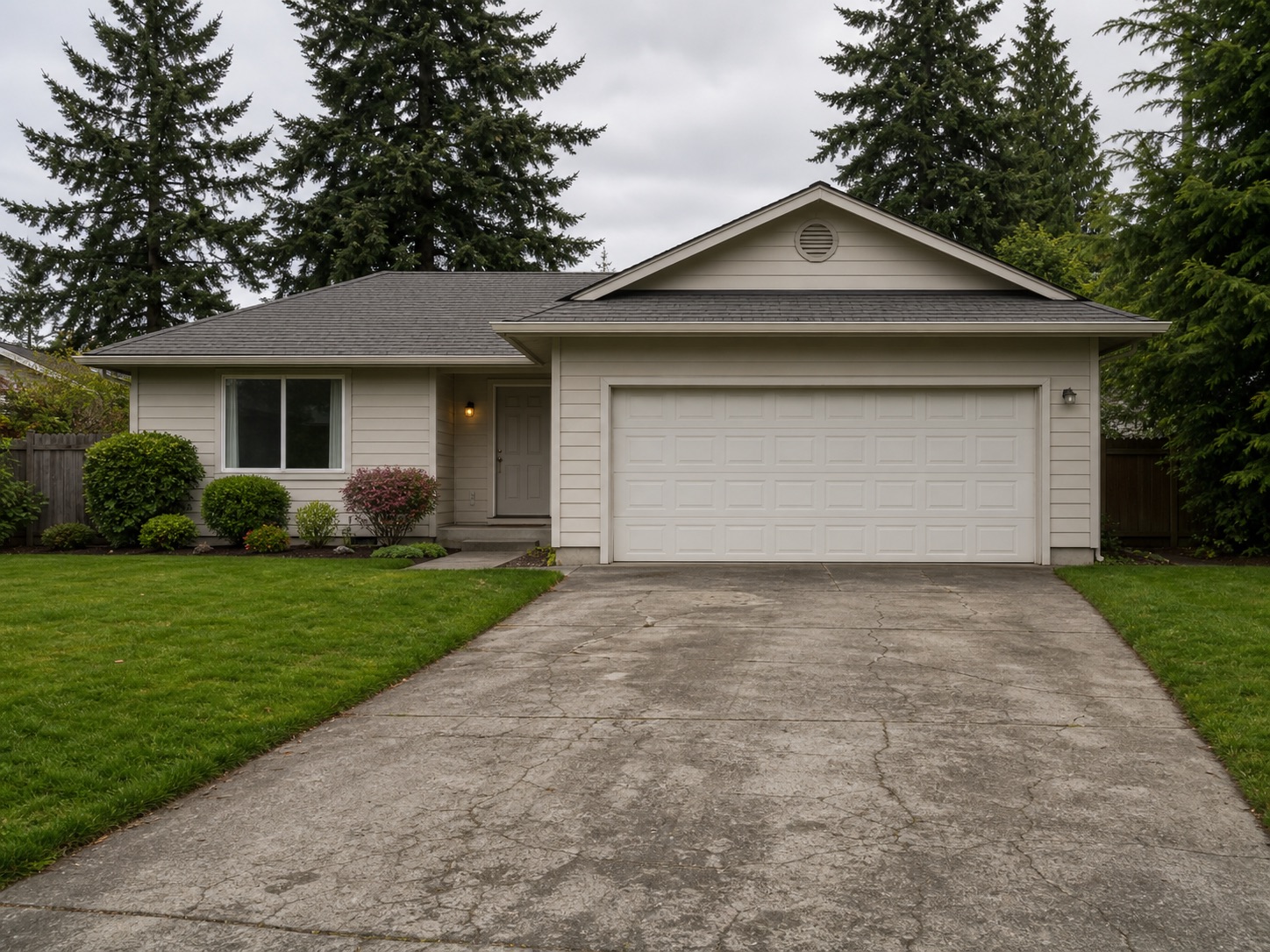
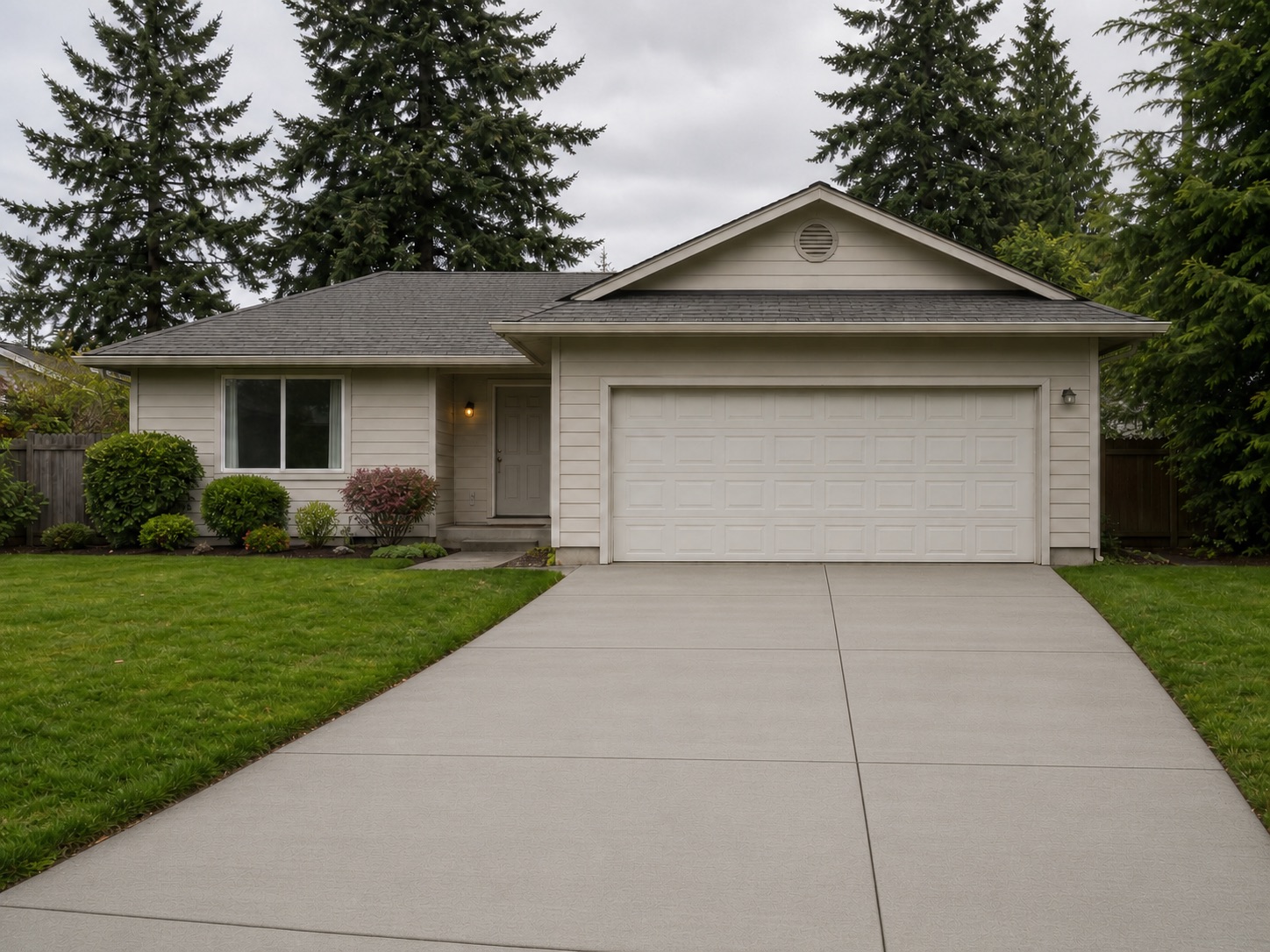
See more in our full gallery.
Driveway FAQs
How thick should my driveway be?
Most residential driveways run 4 to 6 inches thick. Heavier vehicles or RV parking usually call for a thicker, more heavily reinforced slab. We’ll recommend the right depth during your estimate.
How long before I can park on my new driveway?
Concrete is generally walkable in a day or two and safe for light vehicle traffic after about a week. Full cure strength takes roughly 28 days, so we recommend avoiding heavy vehicles until then.
Do I need a permit for a new driveway?
It depends on the scope of the project and whether it affects drainage or right-of-way. We’ll flag it during your estimate if a permit is needed.
Can you replace just a section of my driveway instead of the whole thing?
Sometimes, depending on where the damage is and how it relates to existing control joints. See our Concrete Repair page for more on when a partial repair makes sense versus a full replacement.
Related Services
Ready for a New Driveway?
Serving Marysville, Arlington, Lake Stevens & the rest of Snohomish County.